Maria Santi in the #jungbleiben Portrait: On Bonds, Bodies and Becoming
For Maria Santi, a painting is less a finished object than a path – one she follows and sometimes strays from, letting mistakes and discoveries lead the way. The Argentine artist builds a universe of her own out of curiosity, assembling works from many parts held in dialogue, where fragility and strength turn out to be two sides of the same thing. Thirty years into her practice – and after residencies around the world, including one in Gmünd, Austria – she still lets every new context and encounter fertilize her work.
How would you describe yourself in five words?
Hardworking, creative, impulsive and thoughtful at once, studious.
Your pieces often make invisible emotions feel almost physical. Which emotion drives them – what is it that makes you start a new piece?
The emotion that drives these pieces is curiosity – the interest in building my own universe. There’s also the desire to create something that reflects my state of mind in that particular moment.
You’re based in Argentina and have worked through residencies in different parts of the world, including one in Gmünd, Austria. In what ways do these different places and cultures show up in your work, even if you don’t paint them directly?
Every time I go to a residency, I let myself be influenced by the context and by the other participants and their processes. That’s what interests me, and it’s what fertilizes my work – even when it doesn’t show up directly.
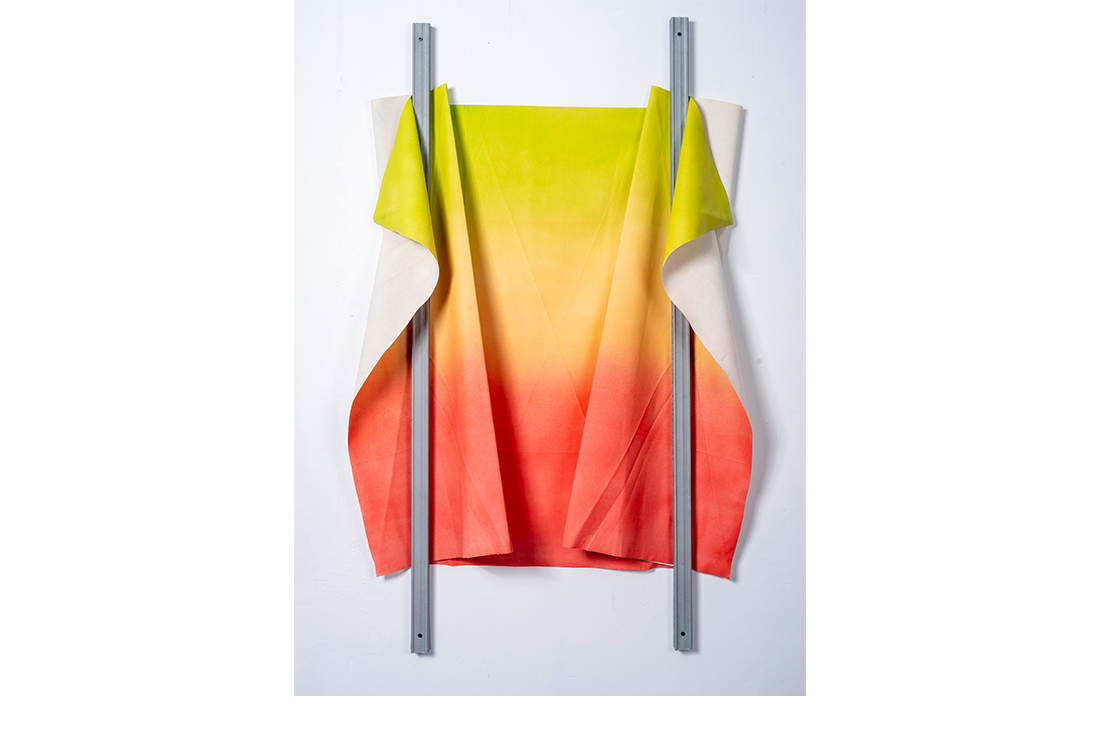
Fotos: © Maria Santi
Your practice moves between abstraction and figuration. When you start a new piece, do you already know which side it will lean towards, or does that decision happen on the canvas?
When I’m working, I’m not thinking about or searching for a finished piece – I’m following a path that takes shape as I go, but also strays. Mistakes and discoveries appear along the way, and that’s where a piece starts to come together. I hold on to the idea of a path, a process, more than the idea of a finished work.
Connection, articulation and transformation run through your current work. How do these bonds take shape on the canvas – and how does something new emerge from them?
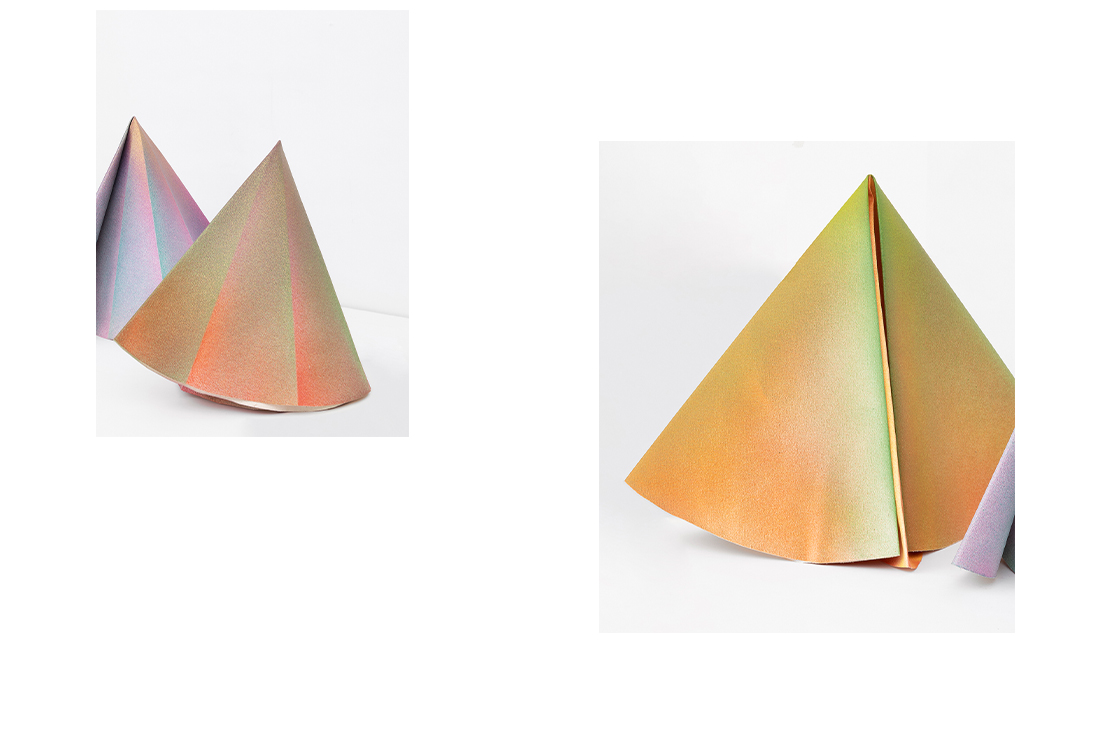
The pieces are built out of many parts in dialogue – they hold each other up and become more complex together.
You often talk about the tension between fragility and strength in human existence. Where do you feel this tension most clearly in your own life, and how does it translate into lines, layers or forms?
Five years ago I started studying astrology, and last year I graduated from Casa Xi in Buenos Aires. From the moment I began getting to know my own energies, I realized that alongside the strength and power I felt, there was also a great fragility, sensitivity and vulnerability living right next to it – something I’d been afraid of until then. Today I feel that being strong and being fragile or sensitive are two parts of the same thing, and that they complement and strengthen each other. That’s what I try to bring into my work.
Your works explore the relationship between body and environment. When you paint, do you think of the body more as a landscape, or the landscape more as a body?
When I talk about “body” in general, I’m talking about the pictorial body – the body of the painting itself. How paint becomes a body in space, how it can structure and sustain itself. And it does that within a specific context. It’s the relationship between body and context, figure and ground.
You describe your process as fluid and intuitive. How do you know when to stop – when a painting has said what it needed to say?
My process is fluid in the sense that it’s continuous. I generally think of it as a path where, through a manual intelligence – a craft, a practice in itself – concepts start to appear, and those are what I work with. I’m in constant dialogue with the piece, listening attentively to what it’s telling me, and I stop when it’s necessary – but it’s a stop in order to keep going.
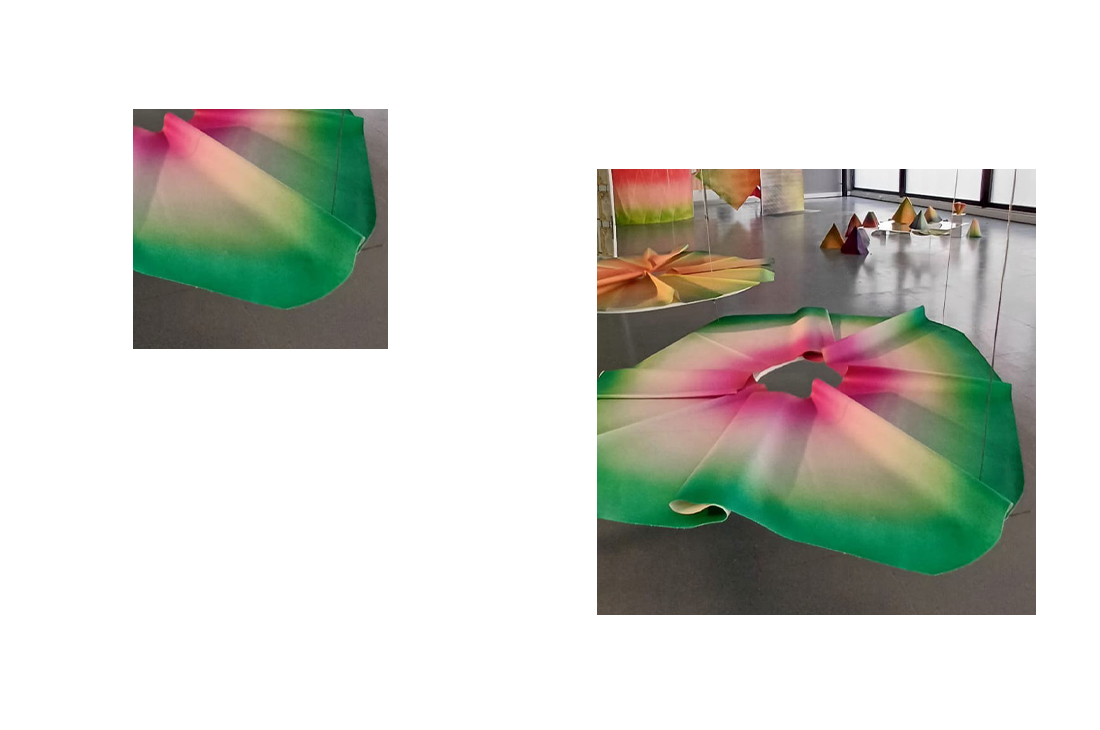
Fotos: © Maria Santi
You’ve shown your work in many different contexts, from markets to group shows and residencies. Over the years, what has changed most in how you see yourself as an artist – and what has stayed constant?
I’ve been working as an artist for thirty years, and what I realize is that even with all that time behind me, there are questions that keep calling to me, and I keep trying to discover their answers. The work keeps changing, as I do too, but there are themes and interests that have run through it, cutting across everything, since my youth. What I can feel today is that I no longer have uncertainty about my path – though the work itself remains, in some sense, uncertain, and I decipher it as I go.
#jungbleiben – What does it mean to you in terms of how you live, and how you want to keep working as an artist over time?
For me, “#jungbleiben” translates into my work through staying contemporary – in the sense of continuing to ask what painting can be today, and what I do to keep my artistic practice connected to the present moment.
And finally: Still, gently sparkling, or sparkling?
Sparkling.